
Imagination as Practical Agency
Harold and the Purple CrayonThe story presents drawing as a means of turning wishes into action, while showing that imaginative power brings responsibility and uncertainty.
increasing Bearing strength in each event
 decreasing
Bearing strength in each eventdecreasingDrawing What Is Missing
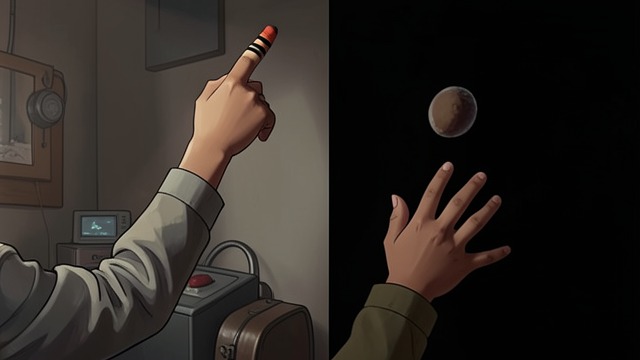
Imagination Supplies Necessities
A lack becomes an invitation
There is no Moon and no walking surface, but Harold still wants a moonlight walk. He answers absence by drawing the parts of the scene he needs rather than treating their absence as a final barrier.
Agency takes visible form
The crayon lets intention become a path and a Moon. Imagination operates practically: it changes what Harold can do next.
Drawing Through Danger

Invention Under Pressure
A response, not an escape from consequence
Harold comes up thinking fast and makes a boat. His drawing does not undo the ocean; it gives him a way to move through it.
Imagination requires adaptation
The episode makes creative power useful because Harold must respond to the situation he now inhabits. Each drawing is judged by what it enables, not merely by its cleverness.
Drawing a Place to Stop
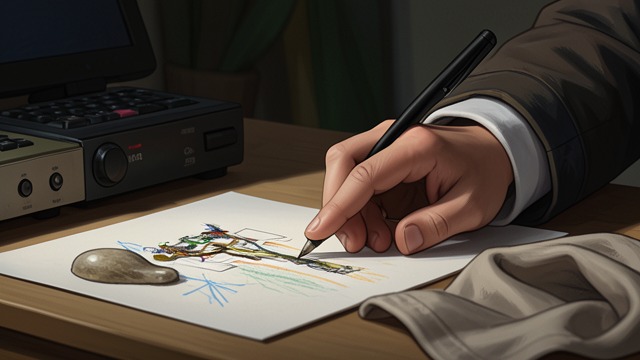
Imagination and Rest
A modest final creation
After a long series of constructed landscapes, Harold draws a bed. The final invention is domestic rather than expansive, giving imagination a purpose beyond making the adventure continue.
Agency can conclude
The crayon falls to the floor as Harold sleeps. The story suggests that creative action matters partly because it can meet a need and then give way to rest.
At the opening, when Harold prepares for the walk
After Harold falls into the ocean
At the close, just before Harold falls asleep
